
Choosing the Perfect Viewpoint
Main Canyon Rim vs. Secret Spots
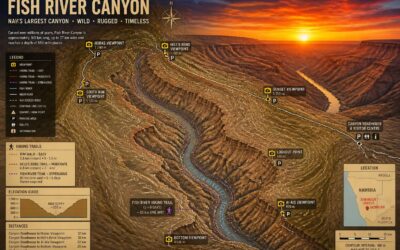
The Main Canyon Rim offers a solid perspective, but secret spots along the eastern edge transform a fish river canyon visit at sunset into a private ritual. I prefer outcrops near the Hunsberg, where light fractures across quartzite. The rim suits photographers and first timers, yet it draws crowds that dilute silence.
Walk the old prospector trails and the rewards are tangible. The walls deepen to burgundy as the sun drops, while the Fish River catches a molten glow. A short list of options:
- Hunsberg viewpoint: two hour drive from the main gate, no railings
- Sunset bend: a narrow ledge with a direct sightline to the river’s final curve
- Old watchtower ruins: wind worn stone, best for solitude
Each spot demands its own commitment, but the payoff is watching the sky change above the rock. Choose wisely, because the canyon’s moods change faster than the map suggests.
Hiking to the Edge: Trail Options
Some viewpoints ask for a physical toll first. The trails leading to the canyon edge are demanding routes across open rock. For a fish river canyon visit at sunset, your chosen path shapes everything.
The Eland Path drops sharply from the western gate, a scramble over loose schist. It ends at a ledge above the river’s braided channels. The Gemsbok Route runs along the northern rim, a three hour climb with wide views but no shade. The Quiver Tree Trail winds through aloe forest to a hidden outcrop, silent and rarely visited.
- Eland Path for exertion before stillness
- Gemsbok Route for wide northern views
- Quiver Tree Trail for solitude
These trails all converge on the same fading light. The difference lies in how your body remembers the approach.
Sunset Orientation and Lighting
Light behaves differently on each canyon rim. Western walls hold amber long after the sun dips, while eastern cliffs fall into indigo shadow. For a fish river canyon visit at sunset, orientation decides what you actually see.
The southern outcrops keep their glow longest. The northern viewpoints dim first. A common mistake is chasing the highest ledge. It crowds with people and catches only the flat, last light.
- The Hollow Point faces west, where the opposite wall reflects dying rays.
- The Saddle sits low enough to catch the river’s narrow gleam.
- The Twin Rocks ledge angles toward the bend, light skimming the water.
I watch the shadow line climb the rock face. It moves faster than you’d think. In every fish river canyon visit at sunset, that final pulse of gold is the moment people return for.
Accessibility Considerations
Only 40 percent of the canyon’s viewpoints are reachable without a 4×4 and a death wish. For a fish river canyon visit at sunset, accessibility becomes the real adventure. The perfect viewpoint is the one you can reach before the light abandons you.
Consider the path’s cruelty. Loose scree, hidden drop offs, and stairs carved by someone who hated knees. The Rim Rock platform offers a paved trail, but it closes at 16:30. The Saddle requires a 20 minute scramble, yet rewards you with silence.
- Signage closure times vary by season.
- Boot grip matters more than boot height.
- Ranger warnings about rockfalls deserve respect.
A fish river canyon visit at sunset demands honesty about mobility. The northern car park sits closest to the edge, but the path floods in dusk. Choose a viewpoint you can exit while the sky still glows. Otherwise, you will stumble in the dark.
Golden Hour Photography Guide
Best Camera Settings for Low Light
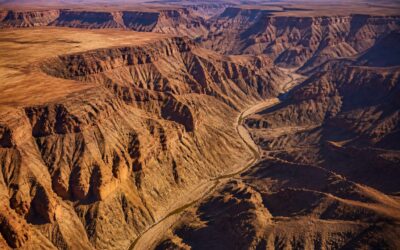
The canyon floor sits roughly 550 metres below the rim, a void that swallows the last light. Capturing a fish river canyon visit at sunset demands more than a good eye, it demands technical control. The shadows deepen quickly, stripping detail from the cliffs in minutes. Your camera must compensate for a contrast range that exceeds most sensors.
Start with a tripod, then build your exposure around the highlights. Aperture priority works, but manual gives you full authority. Set your ISO low, around 100, and let the shutter drag. I prefer to meter for the sky’s warm band, letting the gorge fall into its natural obscurity.
For low light, the settings shift faster than the sun does.
– Use a wide aperture like f/4 to pull in more light.
– Bracket your shots by two stops to secure the highlights.
– Switch to a 2 second delay to kill mirror slap.
The canyon rewards patience, not speed. As the rim glows amber, the walls turn slate blue. Adjust your white balance to “shade” to keep those hues true. A fish river canyon visit at sunset is a race against the gloaming, and the last frame often beats the first.
Composition Tips for Canyon Depth
The canyon’s scale deceives the eye. At sunset, the Fish River Canyon turns into a sequence of darkening layers. To capture that depth, place a prominent foreground object, like a weathered shrub or a broken boulder, at the bottom of the frame. This gives the viewer a measure for the 550 metre drop. Let the river far below act as a leading line. Its curve pulls the gaze from the rim to the glowing horizon.
For a fish river canyon visit at sunset, search for overlapping ridges. They separate the cliff faces into distinct tones. I find a vertical composition often reveals the depth better than a wide panorama. The light moves fast, so frame your shot before the shadows merge. Use these compositional anchors:
- A foreground rock to anchor the scene
- The winding river as a natural guide
- Overlapping ridges to create tonal layers
Using Silhouettes for Impact
As the sun dips behind the western ridgeline, during a fish river canyon visit at sunset, the light becomes directionless. Details dissolve. A boulder becomes a black monolith, and a distant quiver tree transforms into a stark, reaching hand. This is the moment to turn your back to the sun and let the canyon reduce itself to pure anatomy. Silhouettes strip away the colour and force the eye to read the landscape’s bones.
The most compelling images often come from finding a single, uncluttered shape to hold the entire composition. In this reduced light, the familiar becomes strange and powerful. The raw emotional weight of the canyon feels more pronounced when the human figure stands dwarfed against its void. I find my best results come from patience, waiting for the sky to deepen into a final, fiery band. A few shapes that work particularly well for me:
– A lone, gnarled tree skeleton
– A hiker with a backpack, standing very still
– The sharp outline of a distant rock arch
– A bird crossing the darker air
Long Exposure Techniques
A fish river canyon visit at sunset rewards the discipline of long exposures. This technique rearranges light over seconds, compressing shadows into visible movement. The canyon’s softening contours become more apparent as the exposure builds. A neutral density filter is essential. Ten stops stretches dusk into smooth gradients. Six stops suits the broad glow after the sun is gone. Three stops works when the rim still catches direct sun.
Mount the camera on a solid tripod and lock up the mirror. Release the shutter with a cable remote to avoid vibration in the long frame. Meter the brightest patch of sky, then close two stops to preserve colour while the rock faces fall into deep shadow.
- Wild animals crossing the rim become soft streaks
- Heat haze turns into a shimmering veil
- Hikers on the trail dissolve into elongated forms
A fish river canyon visit at sunset becomes a study of time itself when you allow the exposure to accumulate this way.
Instagram-Worthy Angles
The Fish River Canyon’s scale is deceptive until the sun drops. At 300 metres deep, the floor loses direct light half an hour before the rim. A fish river canyon visit at sunset therefore offers a golden hour that changes in deliberate steps. There is no single moment of perfect light. There are ten or fifteen, each distinct.
For Instagram-worthy angles, the frames that work best match the canyon’s anatomy rather than the usual postcard. Examples include:
- a vertical frame from dark cliff base to pale amber sky
- a narrow crop of the opposite wall where the shadow line climbs
- a wide shot of the canyon bending into its own shadow
The images that stand out show this progression. A fish river canyon visit at sunset is a series of light phases, and the best angle captures the phase you are in.
Photo Gear Recommendations
The walk back from the rim is unlit, so a headlamp belongs on top of your pack! The canyon floor loses light half an hour before you climb out, and the path fades quickly. A red light mode lets you adjust settings without losing night vision.
Tripod choice changes with the hour. Wind along the rim rises as the sun drops, so a lightweight travel pod will flex on a long exposure. A full size carbon fibre model with a sandbag hook holds the frame steady.
For a fish river canyon visit at sunset, I carry:
- Carbon fibre tripod with a sandbag hook
- Remote shutter release
- Headlamp with red light mode
- Prime lens with a wide maximum aperture
- Optical lens cloth for dust
Dust and heat shimmer cost more frames than exposure mistakes. The lens cloth gets the most use.
Wildlife Activity at Dusk
Animals to Spot Near the Rim
Dusk is prime time for wildlife along the canyon rim. A fish river canyon visit at sunset reveals a shift in residents as diurnal birds hand over the stage. Klipspringers often pick their way along the edges, while rock hyraxes whistle warnings from the boulders. Bats start their erratic patrol overhead, and if luck holds, a caracal may slink through the scrub below.
- Klipspringer
- Rock hyrax
- Bat-eared fox
- Verreaux’s eagle owl
The quiet is broken by the churring of a nightjar. Patience pays off, as many animals use the twilight to hunt before full darkness. Carry a red-light torch to avoid disturbing them, and keep voices low. A fish river canyon visit at sunset during summer increases your odds, as species are more active in cooler evenings. Watch for movement, not just shapes. Stillness often hides the most interesting guests.
Birdlife During Transition Hours
At the day’s edge, the Fish River Canyon becomes a theatre of wingbeats and calls. The diurnal birds fall silent in stages, leaving the air to the owls and nightjars. A fish river canyon visit at sunset during these transition hours presents a shift in the acoustic landscape, one that birders should track with patience.
The ledges and scrub lines hold the last active species:
- Lanner falcons making final hunting passes
- African fish eagles calling from distant cliffs
- Crimson-breasted shrikes moving through low brush
- Familiar chats perched on exposed rock
These birds use the twilight to feed before full darkness. Their activity peaks in the 40 minutes after the sun clears the horizon. A fish river canyon visit at sunset in summer extends this window, as lingering warmth keeps insects and birds moving longer.
Safety Distance Guidelines
Dusk dissolves the clear boundaries between viewing and intruding. A fish river canyon visit at sunset places you at eye level with creatures who read your stillness differently when shadows stretch. Klipspringers hold their ground on cliff edges while baboons shift through the scrub in looser formations, their temperaments less predictable once the light fails.
Distance becomes a negotiation rather than a fixed rule. The canyon’s acoustics distort in the cooling air, making it difficult to judge how close an animal actually is. I have watched visitors step backward toward a ledge while tracking a hyrax moving the opposite way, each party misreading the other’s intent.
- Keep at least 10 metres between yourself and any klipspringer or rock hyrax
- Maintain 30 metres or more from baboon troops, especially juveniles
- Never position yourself between a mother and her offspring
Binoculars and telephoto lenses exist for this tension. Use them to close the visual gap without closing the physical one. A fish river canyon visit at sunset asks you to observe without disturbing the animals’ final feeding window.
Evening Safety and Preparation
Navigating the Rim After Dark
Once the sun drops below the rim, the canyon turns black within minutes. A fish river canyon visit at sunset demands more than a camera. The walk back follows the edge you admired in daylight, but every step feels different.
Carry a headlamp with fresh batteries, not your phone! Wear closed-toe shoes. Pack a windbreaker, because temperatures plunge after sundown. Agree on a meeting point before departing.
- Check your torch beam before starting the trail
- Bring a spare battery pack or power bank
- Tell someone your exact route and return time
Stick to the main path when navigating the rim after dark. This careful walk ends your evening. Shortcuts near the edge are unmarked and dangerous. Move slowly and pause often.
Weather Hazards to Watch For
The canyon regularly shreds weather forecasts. A fish river canyon visit at sunset requires layers you can remove and tie around your waist as the air cools. The satellite imagery that looked promising at 2pm means nothing once the sun begins its descent. Conditions change with the light.
Wind at the rim arrives in sudden gusts that funnel up the gorge and vanish just as quickly. Temperature drops of ten to fifteen degrees occur within minutes of the sun disappearing. Summer afternoons carry the risk of sudden thunderstorms, which roll across the canyon and expose the open trail to lightning.
- Wind gusts strong enough to rip a hat from your head
- Rapid temperature drops that catch careless walkers in shorts
- Dry lightning from storms that develop faster than forecast models suggest
The canyon does not negotiate on weather. It changes when it decides to change, and no weather app will convince it otherwise.
Essential Gear and Emergency Kit
Evening safety rests on anticipating the dark. A fish river canyon visit at sunset demands a headlamp for navigation and signaling. Your emergency kit must include water, a whistle, and a thermal blanket. Pack these before departing and keep them accessible.
Small mistakes become obvious in the canyon’s silence. Sprained ankles and disoriented hikers happen more often than you think, so prepare for contingencies. A straightforward checklist prevents the oversight that turns a beautiful evening into a cold, anxious night.
- Headlamp with spare batteries
- Whistle and mirror for signaling
- Compact first aid supplies
- Fire starter and matches in a waterproof tin
The emergency kit is non-negotiable. Your evening depends on it.
Park Regulations for Evening Hours
Sunset in the canyon follows a schedule enforced by the park. Rangers close the rim trails at a posted hour, and that hour shifts with the season. A fish river canyon visit at sunset requires you to check the notice board before you descend. The regulations exist to prevent accidents, not to spoil your evening.
Preparation starts with your itinerary. Tell a friend or the gate staff where you plan to be and when you plan to return. Sign the register at the trailhead if one is present. Keep your movements inside marked paths after dusk. The park patrols the area, and they will ask you to leave if you linger past closing.
- Confirm the exact closing time at the visitor center.
- Return to your vehicle before the light fades entirely.
- Stay on the designated rim route.
These hours protect both you and the fragile desert ecosystem. Respect them, and the fading light becomes part of the experience rather than a risk.
Staying Hydrated in Arid Conditions
The dehydration process in the Fish River Canyon is insidious, its onset masked by the dry heat that wicks moisture from your skin before you register a single bead of sweat. The metabolic cost of even a modest descent is considerable, and the thin, desiccated air demands more from your respiratory system than a coastal hike ever will. By the time thirst asserts itself, you are already operating at a deficit, and the canyon’s basalt walls will reflect the remaining afternoon heat back at you with an unforgiving intensity.
For a fish river canyon visit at sunset, your hydration strategy must be proactive rather than reactive. Begin drinking fluids at least two hours before you leave the trailhead, and establish a rhythm of measured sips on the descent rather than a single, desperate gulp at the bottom.
– Carry at least three liters of water per person for the excursion.
– Add an oral rehydration sachet to your second bottle to replenish electrolytes lost through exertion.
– Consume a salty snack, such as biltong or salted nuts, to stimulate thirst and retain the fluids you ingest.
The sun’s retreat offers no respite from this physiological demand. The cooler air tricks your body into believing the threat has passed, but the canyon floor still radiates stored warmth, and your muscles continue to burn energy as you navigate the uneven terrain. Monitor the color of your urine as a crude but effective gauge; a dark, concentrated output is a signal to halt and rehydrate before continuing your ascent.
Extending Your Stay: Tours and Camping
Sunset Guided Tour Options
A fish river canyon visit at sunset often leaves travellers aching for more than a single evening. Overnight camping transforms the rim into a vigil, where the last light bleeds into a star-scattered darkness. Guided tours extend this experience, offering structured routes that align with the canyon’s shifting moods.
Some operators run specialised sunset excursions, departing late enough to avoid the heat and returning under torchlight. Others combine camping with guided walks, so you wake to the canyon’s first breath. For those without a vehicle, these tours solve logistics while adding local knowledge. Book early, the finest slots vanish quickly!
- Book sunset tours in advance during peak season, as groups are capped for safety
- Confirm whether the operator provides lighting for the return path
- Ask about meal provisions, since the rim has no facilities
I have stood on that rim after the crowds departed, and the silence rewrites you. Staying overnight opens a second viewing, the dawn, but the fish river canyon visit at sunset remains the anchor.
Hike-In Campsites with a View
The rim holds its warmth long after the sun abandons it. A fish river canyon visit at sunset becomes a different ritual when you trade the day-tripper’s timeline for a tent platform wedged into the rock. Hike-in campsites west of the main rim require carrying water, but they purchase a solitude that the crowded viewpoints cannot sell. I have woken to the canyon’s first light, the strata glowing amber before the light hardens. The overnight stay rearranges your sense of scale. For the practical details:
– Confirm the campsite’s water source before hauling your load
– Book your permit at the park office, as the scenic sites cap at twelve persons
– Pack a warm layer, the temperature drops sharply once the rim loses the sun
The stars arrive without waiting for full darkness. That lingering twilight, the deep purple counterpoint to the canyon walls, is the anchor.
Wi-Fi and Connectivity at the Canyon
One thing the brochures do not prepare you for is how irrelevant a connected device becomes when the canyon blocks the signal. The main rest camp runs an intermittent public hotspot, strong enough for a message home before the light turns. The guided tour operators that run overnight excursions understand this rhythm. Their camps rest in the lower reaches, where the walls absorb most transmissions.
- Main rest camp: one bar of shared Wi-Fi near the office
- Guided sunset trail camps: no carrier coverage after dark
- Viewpoint parking areas: patchy cellular, enough for directions
Planning for that inconsistency is part of extending your stay. Charge everything at dinner, download the maps, then let the connection fade. A fish river canyon visit at sunset rewards the person who stops checking the screen and watches the rock lose its colour. The silence holds its own signal, deeper than any network.
0 Comments