
Geological and Scientific Importance
Unique Rock Formations
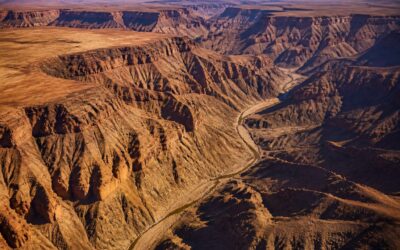
The Fish River Canyon is old. Not just “old” in the grandparent sense of the word, but geologically ancient. The rock formations here represent a staggering 1.8 billion years of Earth’s history, making the canyon a severe case of geological narcissism. It makes the Grand Canyon look like a relatively recent construction project. This is a primary part of the importance of fish river canyon in namibia for scientists. The exposed cliffs act as a massive, open-air textbook, allowing geologists to read the region’s tectonic past. The layers are not just decorative; they are a chronological record of volcanic activity and ancient river systems.
The path from sedimentary rock to the dramatic, igneous gorge we see today is a masterclass in erosion. The canyon floor, a jumble of massive boulders, is the final resting place of millions of years of crumbling. The Flaming Cliffs and the numerous rugged ridges showcase the distinct paleozoic and mesozoic periods. The specific mineral composition, including the granite and gneiss, provides critical evidence of a continental collision that occurred millions of years before the first dinosaur. Folding patterns visible in the walls are often cited as proof of the region’s volatile tectonic history.
Tectonic History and Formation
The canyon’s formation begins with a tectonic rupture that split the ancient continent. Over millions of years, the land subsided, creating a trough. The Fish River then exploited this weakness, cutting downward and exposing layers of basalt and sediment. This sequence of events explains the dramatic cliffs and the rocky floor.
For scientists, the importance of fish river canyon in namibia lies in its uninterrupted stratigraphy. Each stratum records a distinct period of volcanic activity or sedimentation. I consider this site a crucial archive for understanding how rift valleys evolve. The opportunity to sample these deep formations is rare, and it sets this canyon apart from other geological landmarks.
Fossil Records and Paleontology
Some visitors come to the Fish River Canyon for the view. I come for the dead things! The importance of fish river canyon in namibia goes beyond scenery. It is a fossil repository that would make any paleontologist uncharacteristically giddy. The canyon’s walls hold remnants of creatures from millions of years ago.
Here is what you might find if you look closely:
- Shellfish and marine gastropods from an ancient sea
- Plant imprints that record a wetter climate
- Trace fossils of burrowing organisms
These fossils show how species responded to shifting environments. The canyon floor itself contains a rich deposit of early fish. That alone makes this site worth protecting!
Mineral Wealth and Mining Potential
The importance of fish river canyon in namibia extends into economic geology. The canyon exposes rocks that contain garnets, quartz, and other minerals that draw both prospectors and geologists. Mining potential here is tied to the same tectonic forces that shaped the gorge.
The canyon walls reveal a layered crustal section, a rare exposure of deep Earth structure. I have spent hours in these cliffs, and the mineral variety still surprises me. This clarity makes the site important for studying mineral systems. Notable occurrences include:
- Copper prospects in the surrounding Namaqua Metamorphic Complex
- Semi-precious stones such as garnet and epidote
- Industrial minerals including limestone and marble
These resources are not easily extracted, given the canyon’s conservation status and remote terrain. The scientific value of studying these mineral systems remains high! Understanding how ore deposits formed here helps geologists identify similar formations across southern Africa. The importance of fish river canyon in namibia is measured in both knowledge and potential wealth.
Ongoing Scientific Research Value
Every dry season, researchers pack instruments and head for the canyon. The importance of fish river canyon in namibia for science is not frozen in the past. Active studies track how the gorge responds to changing rainfall, how floodwaters move sediment, and how the river recharges aquifers under the desert floor.
Current research priorities include:
- Measuring erosion rates at different depths in the gorge
- Mapping groundwater flow between the river and surrounding bedrock
- Documenting how extreme flood events reshape the canyon floor
These projects feed into climate models used across southern Africa. The data helps predict how other arid landscapes will behave as the region heats up. Each field season produces fresh findings! The canyon has also become a training ground for postgraduate students from South African universities. The importance of fish river canyon in namibia is that it remains a working scientific archive, still revealing how this landscape operates.
Ecological and Biodiversity Value
Unique Desert Ecosystems
The Fish River Canyon is an ecological crucible where life persists under an unforgiving sun. Here, the desert’s famed barrenness gives way to a mosaic of endemic species that have evolved in splendid isolation. The southward bend of the river acts as a biological corridor, allowing fauna to traverse between the high plateau and the arid lowlands. This creates a unique gradient of habitats, from the riverine forests at the bottom to the sparse shrubs that cling to the upper escarpment.
The canyon’s sheer scale provides a natural laboratory for studying arid-zone adaptation. Species like the Hartmann’s mountain zebra navigate the treacherous cliffs with a practiced resolve, while the elusive leopard patrols the rocky outcrops. The importance of fish river canyon in namibia extends beyond its visual grandeur; it is a vital refuge for populations that cannot survive on the open plains.
– The river supports a fragile ecosystem of algae and insects that feeds the entire food chain.
– The cliffs offer nesting sites for rare raptors, including the black eagle.
– The canyon provides a critical water source during the harsh dry season.
This delicate web of life is a powerful reminder of resilience. The canyon operates as a natural water tank, collecting and holding scarce rainfall long after the ephemeral streams have vanished. Protecting this unique terrain is a matter of preserving an intricate, living system that has thrived for millennia. The importance of fish river canyon in namibia is truly defined by this persistent vitality, a quiet testament to nature’s persistence.
Endemic Species Found Only Here
Certain species in the Fish River Canyon have never been found anywhere else. One dwarf aloe grows on a single shaded shelf. A wingless beetle lives only beneath one quartz outcrop. A pale gecko hunts solely along a two kilometre stretch of cliff. These endemics mean the importance of fish river canyon in namibia lies in its role as a genetic refuge.
Plant surveys have documented eighteen exclusive species, including a thread snake and a lichen that feeds one specific mite. Isolation drives such diversity:
- Thermal inversions create cool microclimates for nocturnal insects.
- Alkaline seeps host unique algae anchoring the aquatic food web.
- Vertical cliff faces confine plants with limited seed dispersal.
Each organism stabilises slopes and cycles nutrients. Lose them and entire evolutionary lines vanish. The canyon remains their only home.
River Life and Water Sources
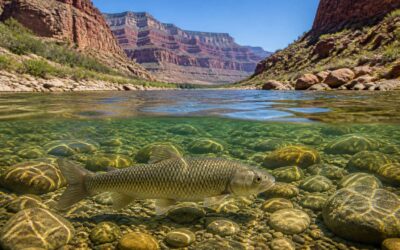
Most of the year, the Fish River runs completely dry. What remains are isolated pools, and those pools hold a functioning ecosystem. This is the importance of fish river canyon in namibia in hydrological terms: a desert system that stores and releases water in precise, fragile rhythms.
Springs and seeps emerge along fault lines, creating permanent water sources that never vanish, even during multiyear droughts. These anchor the river’s life.
- The Largemouth Yellowfish survives in isolated reaches above the dry stretches.
- Water beetles and damselfly larvae feed on algae from alkaline seeps.
- Predatory birds patrol the deeper pools during migration.
When floods finally arrive, they flush salts and reshape the channel, resetting the cycle. I find that brutal reset strangely reassuring: the canyon always renews itself on its own schedule.
Birdwatching Opportunities
Sixty percent of Namibia’s bird species rely on riparian corridors like the Fish River Canyon for survival, yet this breathtaking landscape remains an undiscovered paradise for avian enthusiasts. The canyon’s sheer cliffs create a natural amphitheater where raptor calls echo across the ancient stone. Verreaux’s Eagles perform their spectacular aerial courtship against the orange sky, their massive wings slicing the thermal currents with practiced precision.
Birdwatching opportunities here are extraordinary because the canyon concentrates diverse habitats into a single, accessible theater. The stark contrast between the arid plateau and the riverbed below produces dense pockets of biodiversity that attract species from multiple ecological zones. Visitors can silently observe these communities without disturbing the natural balance.
The permanent springs and seep zones become sanctified grounds for endemic species. The familiar call of the African Fish Eagle pierces the morning stillness, while the delicate Malachite Kingfisher flashes its iridescent plumage along shaded pools. The importance of fish river canyon in namibia extends to bird conservation in these critical microhabitats.
A typical morning walk yields remarkable encounters:
– Ludwig’s Bustard striding silently across open gravel plains
– Fairy Flycatchers flitting through acacia thickets in search of insects
– Pale Chanting Goshawks perched on termite mounds, watching everything
– Sociable Weavers repairing their massive communal nests below the rim
– Booted Eagles migrating through the canyon corridor each autumn
Layering of habitat zones means serious birders can easily record thirty species before breakfast. What strikes me most is the seasonal transformation, when migratory species arrive and the canyon becomes a liquid highway of noise and color. This place proves that importance of fish river canyon in namibia lies not only in its deep geological history, but in its living, breathing population of birds.
Conservation Efforts and Protected Areas
Conservation in this landscape is not a bureaucratic exercise. The canyon functions as a natural corridor linking Namibia and South Africa, and its protected status under the transfrontier park agreement acknowledges that rivers ignore political borders. Rangers patrol a terrain where a single careless fire could erase centuries of ecological stability.
The importance of fish river canyon in namibia becomes stark when you consider the pressures it faces. Mining claims, groundwater extraction, and climate stress all converge here. Conservation efforts focus on:
- Maintaining the integrity of the riparian zone through alien vegetation control
- Monitoring the delicate balance of permanent springs that sustain endemic life
- Coordinating anti-poaching patrols across the rugged escarpment
Protected areas are not passive sanctuaries. They demand constant vigilance, a quiet negotiation between human need and ecological survival. That tension defines the canyon’s future.
Tourism and Economic Impact
Adventure Tourism Hub
The importance of fish river canyon in namibia becomes apparent through its magnetic effect on travelers. I have watched firsthand how this colossal fissure draws over 30,000 visitors each year, their spending rippling through the local economy. The canyon’s remoteness, far from being a deterrent, becomes a reason to come.
Adventure seekers arrive with specific goals in mind. They want tests of stamina and sights of raw beauty. The canyon delivers!
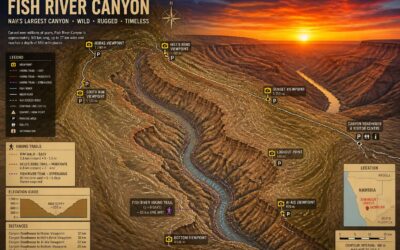
- Traverse the five day hiking trail from top to bottom
- Capture the changing light across the volcanic walls
- Navigate the rugged terrain by mountain bike
This steady stream sustains guesthouses, guides, and supply stores. Permits and entry fees fund conservation projects. The economic impact ripples outward, strengthening the entire region. Local communities rely on this seasonal pulse, and the canyon rewards their hospitality with enduring income.
Scenic Viewpoints and Hiking Trails
Each year, the canyon’s rim viewpoints pull in travelers who spend on lodging and meals. The importance of fish river canyon in namibia shows up in the balance sheets of local businesses. From the main lookout, visitors see the Fish River bend below, a sight that justifies the drive. The canyon’s scenic viewpoints offer more than photo opportunities; they create a reason to linger.
- The Hiker’s Viewpoint offers a clear sightline down the main gorge.
- The Sunset Point draws evening crowds for the shifting light.
- The Echo Cliff rewards those who make the short climb.
Hiking trails cater to different ambitions. Some prefer short edge walks; others commit to the full five day descent. The trail rewards with quiet stretches, rock ledges, and sudden canyon vistas. This traffic supports campsites, shuttle services, and repair shops. Permits pay for trail maintenance. Without the canyon, the region would lose its economic pulse.
Local Community Benefits
The canyon does more than draw crowds. It channels money into a region where options are few and the ground is hard. The importance of fish river canyon in namibia is measured in the guesthouse room nights booked and the meals served at roadside tables.
For the local community, the benefits arrive in a steady stream. The canyon creates seasonal work where jobs are scarce. This income matters when the rains fail or the livestock thin out.
– Local guides earn from small-group tours.
– Small vendors sell water, snacks, and woven crafts at the main gate.
– Fuel stations and repair shops rely on canyon traffic for a meaningful share of their annual turnover.
The canyon gives the people of the south a reason to stay. It is a livelihood, plain and honest, stitched into the rhythm of the year. Tourists come for the view, but the money stays with the families who call this hard land home.
Tourism Infrastructure Development
The Fish River Canyon is no longer a remote anomaly to be crossed off a list. It is a commercial engine for southern Namibia, and the importance of fish river canyon in namibia is now reflected in the annual turnover of regional tourism enterprises. Over 100,000 visitors traverse the rim annually, creating a demand ecosystem that extends far beyond the park gates.
This demand triggers tangible infrastructure investment. Private capital moves into lodge construction near Ai-Ais and the canyon’s northern edge, while regional authorities upgrade the C12 and C37 access roads. The need to cater to international standards compels upgrades in water treatment, waste management, and telecommunications. Hobas Camp receives year-round maintenance that would otherwise be deferred. The result is a hard, paved loop of economic activity.
– Expansion of self-catering chalets to accommodate high season surges.
– Installation of solar micro-grids to reduce diesel dependency.
– Refurbishment of gravel paths and viewpoint railings for safety.
The money flows outward too. Guesthouse owners in Keetmanshoop buy new linens. Mechanics in Grünau stock extra spare parts. I have spoken to tour operators who reschedule entire safaris around canyon track conditions. That dependency is the point. The importance of fish river canyon in namibia is best measured not in scenic superlatives, but in the steady influx of capital that hardens into better roads, reliable power, and permanent structures where none existed before.
Seasonal Travel Patterns
Every May, the trailhead at Hobas stirs with headlamps and hushed excitement. The hiking season, confined to the cooler months, concentrates the canyon’s annual economy into a six month window. I have watched guesthouse owners in Grünau triple their staff before the first wave arrives, and mechanics stock extra suspension parts for the C12’s corrugations.
This seasonality shapes spending patterns. The importance of fish river canyon in namibia becomes stark when a poor rainy season shortens the hiking calendar. Operators who ignore the rhythm face empty beds; those who adapt shift their marketing toward self-drive photographers during the green summer months.
- Winter demand supports full time employment across lodges.
- Summer lulls fund renovation projects and staff training.
- Spring and autumn bring European birders with longer itineraries.
Cultural and Historical Significance
Ancient Human Settlements
Beneath the jagged rim, time has preserved more than rock. Ancient human settlements dot the canyon floor, where early inhabitants found shelter from the arid climate. Excavations have uncovered stone tools, grinding stones, and charred bones, evidence of a resilient community adapting to this unforgiving terrain.
These people left no written chronicle, yet their material traces speak to seasonal migrations and trade networks. The importance of fish river canyon in namibia is thus anchored in its role as a living museum of human endurance. For South Africans exploring this site, it offers a tangible link to the continent’s deep past.
San Rock Art and Petroglyphs
Some of the canyon’s most eloquent records are not written but carved. San rock art and petroglyphs cover over a dozen sheltered gallery walls, their imagery etched into slabs of basalt and slate. These markings include:
- Eland, the central animal in San cosmology
- Human figures in dance postures, possibly trance states
- Spoor lines and abstract grids that map seasonal water sources
For the San, these panels were neither simple decoration nor idle doodling. They functioned as mnemonic devices, storing knowledge for generations navigating this harsh landscape. The continued presence of such art amplifies the importance of fish river canyon in namibia, transforming a geological spectacle into a sacred ledger of shared memory.
Local Legends and Folklore
Every canyon has its secrets, but the ones whispered about the Fish River Canyon carry an eerie weight. Local Nama elders speak of a serpent that slithers beneath the canyon floor, its scales shimmering with the reflection of buried treasure. Others tell of a lost Oorlam chief whose spirit still surveys the vastness from the highest rim.
These stories are not simple entertainment. They anchor the importance of fish river canyon in namibia for communities who have always understood this landscape as alive. The folklore serves a practical purpose, warning travelers of dangerous spots and preserving tribal memory through generations. Believe me, when the wind howls through those gorges at dusk, it is easy to imagine the restless spirits!
Colonization and Exploration History
The importance of fish river canyon in namibia grew for colonial powers only after they faced its terrain. In 1896, German explorers measured the main gorge, while British officers charted escape routes during the Herero wars.
Local guides proved essential. Their knowledge of water sources and cliff paths determined which surveys succeeded. I notice this pattern in every archive I read.
- 1910: First complete topographic map
- 1929: Geological expedition to study rock layers
- 1943: Aircraft reconnaissance for military use
By the mid-20th century, the canyon entered national consciousness. The importance of fish river canyon in namibia now carries historical weight beyond its natural splendor.
Environmental and Sustainable Practices
Climate Change Resilience
In an era of shifting rainfall patterns, the importance of fish river canyon in namibia is clear in how it stores water and supports life. The steep walls trap moisture, creating refugia for species that models predict will face heavier stress by 2050.
Sustainable practices here prioritize minimal footprint tourism. Daily entry caps protect the fragile soil crust, and all waste is carried out. Rangers monitor trail erosion and adjust routes seasonally.
- Solar microgrids power remote camps
- Greywater recycling in lodges
- Indigenous drought resistant landscaping
Climate resilience also means tracking the ephemeral Fish River’s flow. Local hydrologists use the canyon as a benchmark for aquifer recharge, informing regional water strategies across southern Africa.
Water Conservation Strategies
Water conservation here demands creativity. The canyon’s hydrology offers lessons for engineers. They study how it retains moisture after droughts, then apply those patterns to irrigation designs.
- Fog nets catch coastal mist
- Rock catchments channel storm runoff
- Compost bins replace flush toilets
These strategies reduce demand by a third. They also protect the river’s base flow, ensuring downstream communities have predictable supply. The importance of fish river canyon in namibia sets a standard for dry region policy across southern Africa.
Ecotourism Initiatives
Visitors rarely see the quiet mechanics of sustainability at Fish River Canyon. The lodges and campsites operate under strict permits that cap daily numbers, and I have watched managers turn away full tour coaches to protect the fragile riparian edges. The importance of fish river canyon in namibia is visible in how tourism revenue returns directly to habitat restoration and anti-poaching patrols.
Consider the standards required of every accredited operator:
- Solar microgrids replace diesel generators at remote camps
- Gray water is filtered through constructed wetlands before release
- Local guides complete certified courses in geology and site interpretation
These requirements stem from practical necessity. The canyon’s isolation makes waste removal expensive, which is why the carry-in, carry-out rule is enforced with genuine rigor. Ecotourism here functions as a closed loop. That discipline is precisely what sustains the gorge’s ecological integrity, and it speaks to the importance of fish river canyon in namibia as a working model for protected area management.
Visitor Impact Management
The silence down here is a physical presence. You hear your own breath, the clack of a stone tumbling into the abyss, the mournful cry of a hawk patrolling the thermals. This quiet is the rarest commodity in the modern world, and it is protected with a severity that borders on the obsessive. There are no permanent structures etched into this ancient rock, no railings, no gift shops. The landscape resists them. The only true guardians are the permits, the carry in, carry out rules, and a fatigue that settles on the visitor who fully comprehends the scale of the place.
In this seclusion, management becomes a quiet art. Park authorities employ a system of rotational closure for certain trails. This lets the fragile gravel plains and hardy succulents recover from human passage. The poacher, the illegal firewood collector, they are tracked by rangers who know every finger of this gorge. This authority is not just about protection; it is a stewardship that acknowledges the canyon’s dominance. The visitor learns to tread with a certain reverence, understanding they are guests in a place older than memory.
A standard of conduct is enforced, where the absence of impact becomes the primary luxury:
– Visitor numbers are strictly limited by available accommodation permits.
– All waste, including organic matter, must be carried out of the park.
– Drone usage is prohibited to protect nesting raptors and the serenity of other hikers.
– A portion of every park fee is allocated to habitat maintenance and the water quality monitoring of the distant river.
The importance of fish river canyon in namibia lies in this quiet compact between human and wilderness. The true measure of a successful visit here is not the photograph, but the lack of trace left behind. It is a silent transaction where we give up our noise, our convenience, and our arrogance, in exchange for the privilege of witnessing its eternal and patient destruction. The canyon wins every time, and that is the point.
Community-Based Natural Resource Management
I have heard the canyon before I have seen it. The low, continuous hum of wind moving through the Fish River Canyon is a sound that seems to come from the earth itself. This immense scar in the Namibian landscape feels separate from the modern world, a place where time is measured in millennia rather than minutes.
The importance of fish river canyon in namibia extends beyond its sheer geological scale. For centuries, this land has been the domain of the communities that live along its rim. Today, the approach to managing this wilderness reflects a philosophy of shared responsibility, a Community-Based Natural Resource Management system that is both practical and deeply respectful of tradition.
- Local communities receive direct employment as guides, trackers, and lodge staff.
- Revenue from tourism is channeled back into community projects, such as schools and water infrastructure.
- Conservation efforts are led by locals who possess an intimate knowledge of the terrain and its wildlife.
This stewardship creates a tangible link between the health of the gorge and the prosperity of the people nearby. The basin’s water, which filters through ancient rock, sustains not only the wildlife but also the grazing lands and villages surrounding the park. The importance of fish river canyon in namibia is woven into the daily life of the region.
It is a quiet balance, one that is maintained through careful observation and a genuine commitment to the future. When a solitary himba herder guides his cattle toward a distant watering point, he does so with an understanding that the canyon’s survival is tied to his own. This is not a government mandate handed down from above; it is a pact of coexistence, written in the dust and the dry riverbed.
The older members of these communities speak of the canyon with a solemnity reserved for sacred places. Their stories, passed down through generations, remind us that this landscape is a living entity. The importance of fish river canyon in namibia, therefore, is not simply found in its walls or its fossils, but in the enduring relationship between its human custodians and the land they have vowed to protect. The balance is real, and it holds.
0 Comments